 St. Petersburg Siding
 Siding Built for What Childs Park Weather Actually Does to a House
Childs Park homes sit in one of the toughest exterior-durability environments in the country. It's not one single threat — it's four working on the siding at the same time, year-round. Hurricane-force wind events test how well the siding is fastened down and how it handles flying debris. Near-constant UV exposure bakes paint and coatings for months longer than most of the country ever sees. Wind-driven rain doesn't just wet the surface, it drives moisture sideways into seams, laps, and fastener points looking for a way behind the cladding. And salt-laden air moving inland off Tampa Bay accelerates corrosion on anything metal and speeds up the breakdown of lower-grade siding materials, even blocks away from open water.
None of that is unique to Childs Park specifically — it's Pinellas County, full stop — but it means siding installation here isn't a cosmetic project. It's a system that either holds up to that combination or starts failing within a handful of years. This page is about what a correct siding installation looks like for a Childs Park home, and why the material and the crew you choose both matter more here than in a milder climate.
What "Correct" Siding Installation Actually Involves
Siding is a system, not a single layer. The visible panels get all the attention, but most siding failures in this climate trace back to something underneath them, not the panels themselves. A correct installation addresses every layer:
The Substrate and Water-Resistive Barrier
Before any siding goes up, the wall sheathing needs to be sound — no rot, no soft spots, no hidden water damage from a previous installation. Over that goes a proper water-resistive barrier, installed with correct overlaps (always shingled so water sheds downward and outward, never trapped behind a seam) and sealed at every penetration: hose bibs, electrical boxes, vents, and anywhere something punches through the wall.
Flashing at Every Transition
Windows, doors, rooflines, and any point where two different materials meet are where wind-driven rain finds its way in. Flashing has to be layered correctly — under the barrier on the high side, over it on the low side — so water is always directed out, never invited in. This is the detail that separates an installation that survives a decade of Gulf storms from one that starts showing interior water stains after two or three seasons.
Fastening for Wind Load
Pinellas County's wind-load requirements exist because this area gets tested by tropical storms and hurricanes on a near-annual basis. Fastener spacing, fastener type, and blind-nailing versus face-nailing all affect how well siding stays attached when wind gets under an edge and starts prying. Manufacturer installation instructions specify exact nailing patterns for a reason — skipping or shortcutting them is one of the most common causes of siding blow-off in wind events.
Ventilation Behind the Cladding
Any moisture that does get past the outer layer needs a way to dry out. A ventilated rainscreen gap or properly detailed drainage plane behind the siding lets incidental moisture escape instead of sitting against the sheathing. In a climate this humid, that drying capacity is what keeps small amounts of moisture from turning into rot or mold over time.
Why We Install Only James Hardie Fiber Cement
We don't install vinyl, LP SmartSide, primed wood, or other fiber cement brands. That's a deliberate standard, not a sales pitch, and it's worth explaining honestly.
Vinyl siding is affordable and easy to install, but it's a plastic product, and plastic softens, warps, and becomes brittle under sustained heat and UV — exactly what Pinellas County delivers every summer. It also has real limits in high wind, since it relies on interlocking panels rather than a rigid, fully fastened surface.
Wood-based products, including primed spruce, cedar, and engineered wood siding like LP SmartSide, perform well in drier, more moderate climates. Here, sustained humidity and wind-driven rain create constant moisture exposure at seams and cut edges, and wood-based products are more sensitive to that exposure over time than fiber cement is. That doesn't make them bad products — it makes them a worse fit for this specific climate.
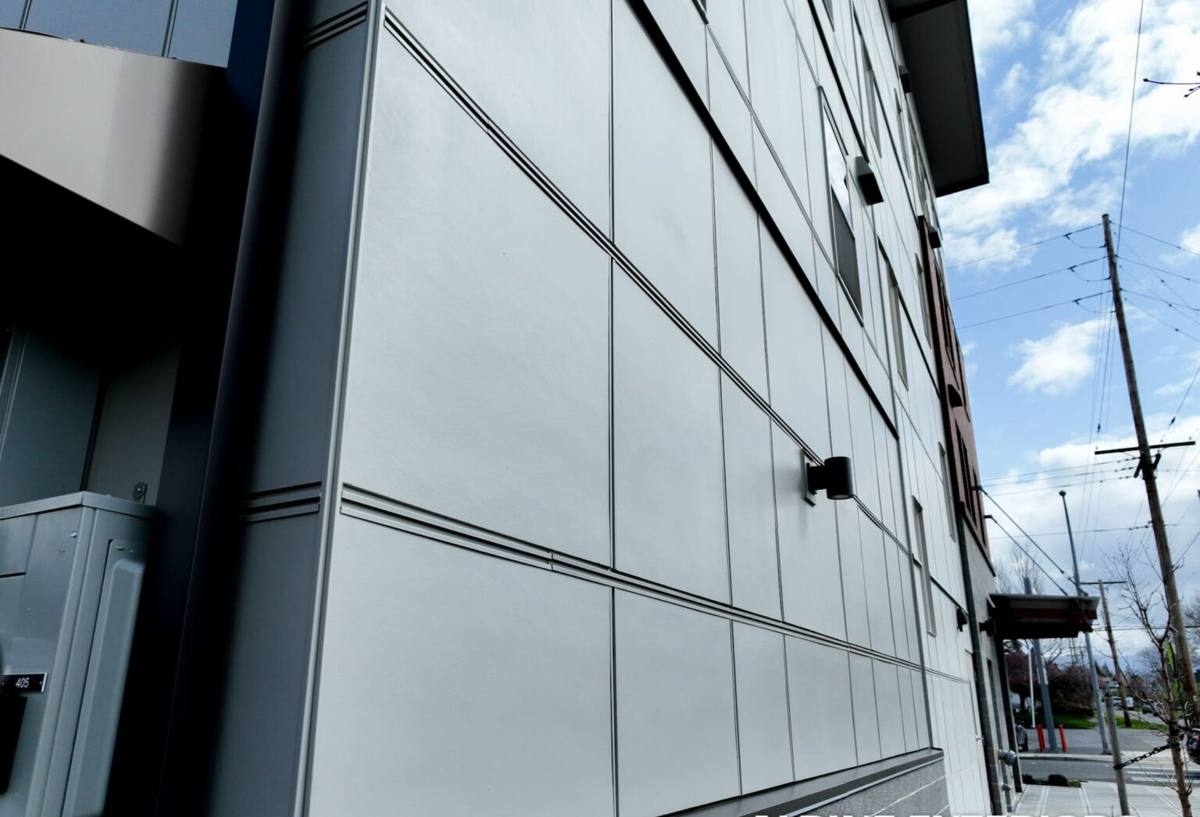
Not all fiber cement is the same, either. James Hardie engineers regional product lines specifically for climate conditions — its HZ5 product line is formulated for hot, humid, moisture-heavy climates like Florida's, with an emphasis on moisture and impact resistance. The factory-applied ColorPlus finish is baked on and warrantied against fading, chipping, and cracking far beyond what a field-applied paint job can offer, which matters enormously under Pinellas County's UV load. Fiber cement is also non-combustible, resists pest damage, and holds up to wind-driven debris better than lighter-weight materials.
We standardized on Hardie because, installed correctly, it's the material best matched to what Childs Park homes actually face every year. That's the whole reason behind the standard.
How Our Installation Process Works
1. On-Site Assessment
We start by walking the entire exterior — not just the siding, but trim, window flashing, roofline transitions, and any areas showing prior water intrusion. Florida homes, especially older ones, often have hidden moisture damage that isn't visible until the old siding comes off.
2. Tear-Off and Substrate Inspection
Once old siding is removed, we inspect the sheathing underneath for rot or damage before anything new goes up. Covering a compromised substrate with new siding just hides the problem — it doesn't fix it.
3. Water-Resistive Barrier and Flashing
New barrier goes on with correct shingled overlaps, and flashing is installed at every window, door, and roofline transition before the first piece of siding is hung.
4. Hardie Panel Installation
Panels are installed to James Hardie's published fastening specifications for this wind zone — correct fastener type, spacing, and clearance from grade and other surfaces, which also protects the manufacturer's warranty.
5. Trim, Caulking, and Touch-Up
Joints are sealed with a siding-appropriate sealant, factory-cut edges are touched up with matching ColorPlus touch-up paint, and trim details are finished to shed water correctly.
6. Final Walkthrough
We walk the finished job with the homeowner, point out what was done, and answer questions about care and warranty coverage.
Signs a Childs Park Home May Need New Siding
- Visible warping, buckling, or panels that flex when pressed
- Peeling or bubbling paint, especially on sun-exposed walls
- Soft spots or discoloration near the base of walls or below windows
- Persistent musty smell inside near exterior walls
- Visible gaps, cracks, or missing caulk at seams and trim
- Siding that's more than 20-25 years old, particularly wood-based or vinyl products
- Rising energy bills that suggest failing insulation behind the siding
Comparing Siding Materials for This Climate
| Material | UV/Fade Resistance | Moisture Tolerance | Wind Performance | Typical Lifespan Here |
|---|---|---|---|---|
| Vinyl | Fades and can become brittle | Fair; not moisture-sensitive but panels can warp | Limited; relies on interlocking panels | 10-20 years |
| Primed wood / cedar | Requires repainting | Sensitive to sustained humidity | Moderate | 10-15 years with upkeep |
| Engineered wood (LP SmartSide) | Requires repainting over time | Better than raw wood, still moisture-sensitive at cuts/seams | Good when fastened correctly | 15-25 years |
| James Hardie fiber cement (HZ5) | Factory ColorPlus finish, warrantied | Engineered for humid climates | Strong when installed to spec | 30+ years |
What Drives the Cost of a Childs Park Siding Job
Every home is different, but the main cost drivers are consistent across most Childs Park projects:
| Factor | Why It Matters |
|---|---|
| Home size and wall complexity | More corners, gables, and dormers mean more cutting, flashing, and labor |
| Substrate condition | Rot or water damage found during tear-off requires repair before new siding goes on |
| Siding profile chosen | Lap width, board-and-batten, and shingle-style Hardie products vary in material and labor cost |
| Trim and accessory scope | Corner boards, window trim, and soffit work add to the total |
| Access and site conditions | Tight lots, multi-story sections, and landscaping can affect labor time |
Why Hiring a Crew That Already Works in Childs Park Matters
Correct fastening patterns, flashing details, and wind-rated installation aren't things you can shortcut and still expect the siding to perform in a Gulf Coast storm. A crew that regularly works St. Petersburg and Pinellas County homes already understands the local wind-load expectations, the way Florida humidity behaves behind a wall, and the kind of substrate condition common in this area's housing stock. That familiarity shows up in the details — the ones that don't get noticed until a storm rolls through and the siding either holds or doesn't.
It also matters for warranty protection. James Hardie's transferable warranty coverage depends on installation meeting the manufacturer's specifications. A crew unfamiliar with those specs, or one that installs a mix of products without a set standard, is more likely to create gaps that put that coverage at risk.
Maintenance and What to Expect After Installation
One of the practical advantages of James Hardie fiber cement is how little ongoing maintenance it needs compared to wood-based or vinyl alternatives. There's no repainting cycle driven by fading or peeling — the ColorPlus finish is designed to hold its color for years under the same sun exposure that breaks down field-applied paint faster. Periodic rinsing to remove salt air residue and dust, along with an annual visual check of caulked joints and trim, is generally enough to keep the system performing as installed. Any caulk or sealant touch-ups are minor, low-cost maintenance compared to repainting or replacing panels.
Get a Free, No-Pressure Estimate
If your Childs Park home's siding is showing its age, or you're planning ahead of the next storm season, we're happy to take a look and give you a straight assessment — no pressure, no upsell. Fill out the form below for a free estimate.