 St. Petersburg Siding
 Why Snell Isle's Waterfront Setting Changes What Siding Needs to Do
Snell Isle sits right on the water, and that changes the math on siding. A house a few miles inland in St. Petersburg deals with Florida heat and rain like everywhere else in Pinellas County. A house on Snell Isle deals with that plus near-constant salt-laden air coming off the bay, more direct wind exposure with less inland buffer to slow gusts down, and, on canal and open-water lots, humidity that never really lets the exterior dry out completely. None of that is a reason to panic about your siding — but it is a reason to be honest about what material and installation approach actually holds up here, versus what looks fine in a showroom and struggles five years into a real waterfront exposure.
This page is about siding replacement specifically for Snell Isle homes: what the environment demands, what a correct job looks like, and how our process is built around this neighborhood rather than a generic install.
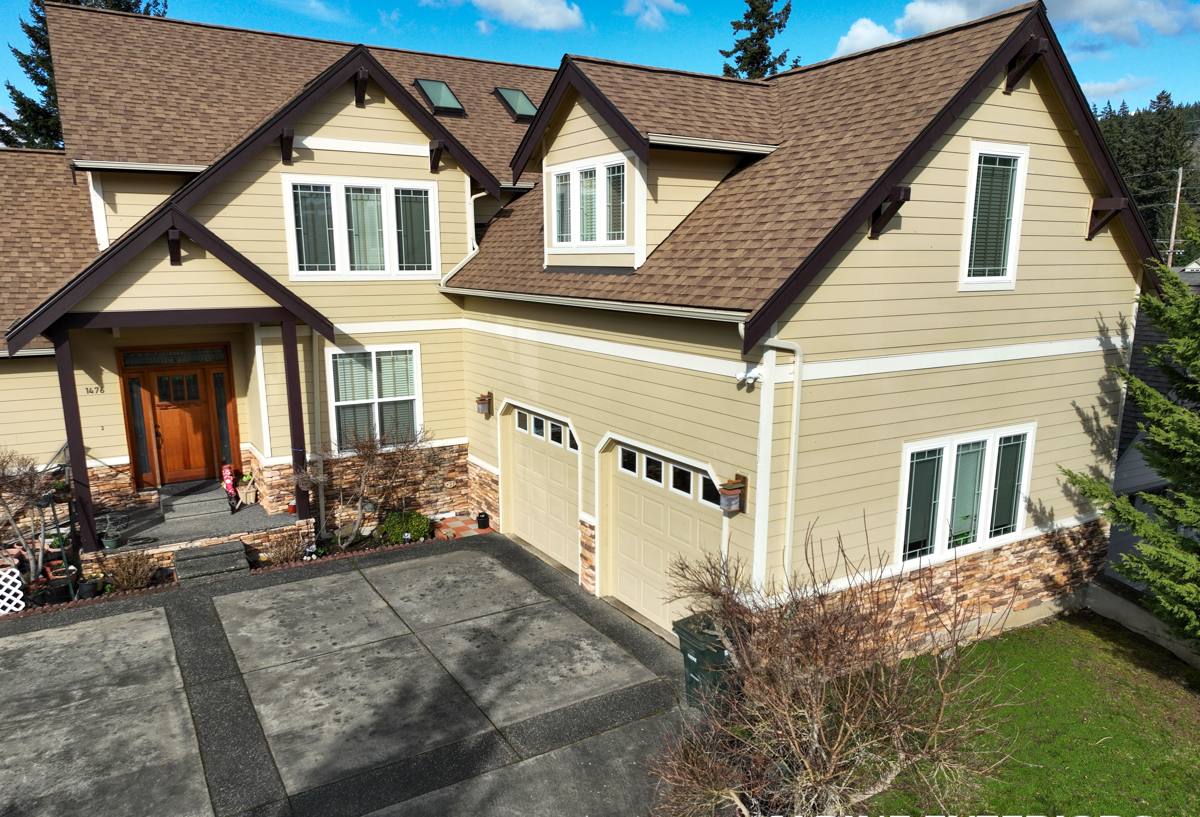
What St. Petersburg's Climate Actually Does to Exterior Siding
Salt Air
Airborne salt is corrosive to metal fasteners and trim, and it's abrasive to any coating that isn't built to shed it. Over years, salt exposure is what turns a siding product's weak points — chalky paint, soft caulk lines, exposed raw fasteners — into visible problems faster than the same product would show in a drier, inland part of the county.
Year-Round UV
Florida sun doesn't take a season off. Constant UV breaks down pigments and resins in lower-grade factory finishes and field-applied paint alike, which is why fading, chalking, and streaking show up faster here than the national averages printed on most siding warranties.
Wind-Driven Rain
St. Petersburg's storms don't just drop rain — they push it sideways, into laps, seams, and trim joints that a calm-weather install might never test. Wind-driven rain is what finds a poorly flashed window or a gapped panel and turns it into a moisture problem behind the siding, not just a wet spot on top of it.
Hurricane-Force Wind Loads
Waterfront exposure means less to break the wind before it hits the house. Siding on a Snell Isle home needs a fastening pattern and a product rated for the wind zone it's actually in — not the minimum a supplier ships as standard for the state.
Signs a Snell Isle Home Needs Siding Replacement, Not Just Repair
Repair makes sense when the problem is isolated. Replacement makes sense when the damage or the underlying material tells you the whole system is past its working life. Look for:
- Soft, spongy, or crumbling siding you can press in with a thumb — usually a sign of moisture that's been getting behind the material for a while
- Visible warping, bowing, or panels that no longer sit flat against the wall
- Paint or finish that's chalking heavily, fading unevenly, or peeling in sheets rather than just needing a touch-up
- Persistent staining or a musty smell along interior walls that share an exterior wall with older siding
- Repeated caulk failure at the same seams or trim joints every year or two
- Siding that's original to a house built decades ago and has never been fully replaced, even if it "looks okay" from the street
If you're seeing more than one of these, it's worth a proper inspection before deciding between patching and replacing.
Why We Install Only James Hardie Fiber Cement
We don't install vinyl, LP SmartSide, Cemplank, Allura, or primed wood siding like cedar or spruce. That's a deliberate standard, not a sales pitch, and it's worth explaining honestly rather than just asserting it.
Vinyl is affordable and low-maintenance, but it softens and can deform in sustained high heat, and in a hurricane wind zone it's more vulnerable to being torn loose or cracked by wind-borne debris than fiber cement. Engineered wood products like LP SmartSide perform well in many climates, but they rely on their outer coating staying intact to keep moisture out of the wood strand core — a coating breach in a humid, salt-air environment is a bigger long-term risk than the same breach would be inland. Untreated or primed wood siding (cedar, spruce) needs a maintenance schedule most homeowners underestimate, and near the water that schedule gets tighter, not looser. Other fiber cement brands make a reasonable product, but we've standardized on one manufacturer so we can guarantee consistent installation training, flashing details, and warranty support instead of juggling install specs across several product lines.
What James Hardie Gets Right for This Environment
Fiber cement is non-combustible and dimensionally stable — it doesn't expand, contract, or absorb water the way wood-based products can, which matters in a climate with heavy humidity swings and constant UV. James Hardie's ColorPlus finish is baked on at the factory under controlled conditions and is engineered specifically to resist fading and cracking in sustained sun exposure, backed by a finish warranty that's meaningfully stronger than most field-applied paint jobs. Hardie also engineers specific product lines (their HZ5 and HZ10 climate zone formulations) for high-humidity, moisture-prone regions like ours, and offers a transferable limited warranty that adds real value if you ever sell the house.
What Correct Installation Involves on a Waterfront Home
The siding product is only half the equation. Installation quality is what actually determines whether a house holds up to hurricane season after hurricane season, and it's where a lot of jobs quietly go wrong.
| Installation Detail | Why It Matters Here |
|---|---|
| Weather-resistive barrier behind the siding | Acts as the real moisture backstop if wind-driven rain gets past the siding surface |
| Proper flashing at windows, doors, and roof lines | These are the most common points where water actually enters a wall system |
| Correct fastener type, spacing, and embedment | Under-fastened or wrong-fastener siding is a leading cause of wind failure in storms |
| Clearance from grade, roofing, and decks | Keeps the bottom edge of siding from sitting in standing moisture or splash-back |
| Caulking at joints and trim, not gaps left open | Prevents the small entry points wind-driven rain is best at finding |
| Manufacturer-specified overlap and panel gapping | Allows for material movement without cracking or buckling over time |
Any of these done incorrectly can leave a brand-new, correctly chosen siding product performing like a cheap one. This is why we treat installation specs as non-negotiable, not as line items to speed through.
Our Snell Isle Siding Replacement Process
- On-site assessment. We inspect the current siding, look for underlying moisture or structural issues, and check the home's specific wind exposure given its position relative to open water.
- Scope and product selection. We walk through the right James Hardie line and profile for the house, factoring in sun exposure, proximity to the water, and the look you're going for.
- Permitting. Siding replacement in Pinellas County requires permitting, and homes in coastal-adjacent areas may have additional wind-load or building code considerations we handle as part of the process.
- Tear-off and inspection of the wall sheathing. Removing the old siding is also when hidden moisture damage gets found and addressed before anything new goes on.
- Weather barrier and flashing installation. This layer goes in correctly before a single piece of new siding is hung.
- Hardie installation to manufacturer and local wind-zone specifications. Fastening, clearances, and joint treatment are done to spec, not shortcuts.
- Final inspection and cleanup. We walk the finished job with you and make sure the site is left clean.
Cost Factors for Siding Replacement in Snell Isle
Every house is different, so we won't throw out a number that doesn't mean anything without seeing the property. What actually moves the price:
| Factor | Effect on Cost |
|---|---|
| Home size and number of stories | More surface area and access complexity increase labor |
| Condition of existing wall sheathing | Hidden moisture or rot found during tear-off adds repair scope |
| Siding profile and trim complexity | Architectural detailing (multiple profiles, extensive trim) takes more time than a simple lap-siding elevation |
| Water/wind exposure of the specific lot | Open-water or canal-front homes may call for more robust flashing and fastening detail |
| Access constraints | Tight lots, mature landscaping, or dock/seawall proximity can affect staging and labor |
The only way to get an honest number is a walk-through, which is what our estimate is for.
Why Local Experience in This Neighborhood Matters
A crew that's worked on Snell Isle homes before already knows what a waterfront wind exposure means for fastening schedules, has seen how salt air ages different products and finishes over time, and understands the mix of older and newer construction found in this part of St. Petersburg. That familiarity shows up in fewer surprises mid-project — knowing to check for certain moisture patterns on older homes, understanding how to stage a job on a tighter waterfront lot, and being upfront about what the local exposure actually calls for instead of applying a generic, inland install approach to a house that faces very different conditions every single day.
What to Ask Before You Hire a Siding Contractor
- Are you licensed and insured to work in Pinellas County, and can you show proof?
- What siding product and specific line are you proposing, and why that one for a waterfront-adjacent home?
- What's your fastening and flashing spec, and does it account for this property's wind exposure?
- Who pulls the permit, and is that included in the quote?
- What does the manufacturer's warranty actually cover, and is it transferable if you sell the home?
- Can you walk me through what happens if you find moisture damage once the old siding comes off?
A contractor who answers these clearly, without dodging or vague reassurances, is one worth taking seriously.
If your Snell Isle home's siding is showing its age or you're planning ahead of the next storm season, we're happy to take a look and give you a straight, no-pressure estimate — just fill out the form below.